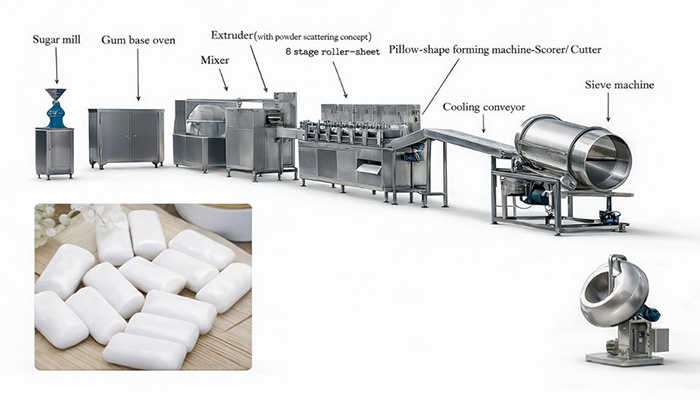
When sourcing gum base for chewing gum, bubble gum, or sugar-free gum, quality is not an abstract concept. It directly affects texture, flavor release, processing stability, and the likelihood of complaints after launch.
From a manufacturer’s point of view, the real challenge is not producing a gum base that can be chewed, but one that remains consistent from batch to batch, works well with different sweeteners and flavors, and runs smoothly on real production lines.
This checklist summarizes how gum base is commonly evaluated in practice—and what buyers should confirm before placing an order.
1) Texture & Performance: What "Good Chew” Means in Practice
Terms like "soft,” "elastic,” or "not sticky” are often used, but they can mean very different things in real applications. In production, these descriptions usually translate into specific performance behavior.
1) Chewability and elasticity over time
A well-designed gum base should feel balanced at the first bite and stay relatively stable during chewing. When the formulation is not well matched, typical issues include:
• an overly hard first bite
• rapid softening after a few minutes
• excessive stickiness that affects wrapping and consumer acceptance
These issues do not only affect mouthfeel. In many cases, they also create problems during forming, cutting, or wrapping.
2) Bubble performance (for bubble gum base)
Bubble gum base places higher demands on stretch and film formation. If the base is not designed for this purpose, bubbles tend to tear easily, form unevenly, or lose structure after chewing.
3) Polyol compatibility (for sugar-free gum base)
Sugar-free gum introduces additional challenges, as polyols influence moisture and texture. An unsuitable base may lead to dryness, grainy texture, or unstable sweetness release during storage.
Questions buyers often ask:
- Do you offer different grades for chewing gum, bubble gum, and sugar-free gum?
- What texture range does this grade target?
- Is this grade available for pilot-scale testing?
2) Safety and Risk Control: What Actually Matters
Even when no harmful substances are intentionally added, gum base safety depends on how risks are managed throughout sourcing and production.
1) Raw material control
Fillers, resins, and softeners can vary significantly by source. Reliable manufacturers usually maintain:
- defined supplier lists
- incoming inspection standards
- batch-level traceability
If these basics are unclear, long-term risk increases regardless of price.
2) Process and equipment control
In gum base production, wear, cleaning routines, and cross-contamination management matter. Practical controls may include preventive maintenance, food-contact material standards, and basic detection or filtration measures, depending on process design.
3) Documentation buyers actually use
For global buyers, practical documents are more useful than generic claims. These typically include batch COA, traceability records, and additional test reports when required by specific markets.
Simple questions that reveal a lot:
- Can batch COA and traceability be provided?
- What third-party testing is available if required?
- How is cross-contamination between grades controlled?
3) Process Stability: Performance on the Production Line
A gum base that looks acceptable in small samples may behave very differently at scale. Manufacturers therefore evaluate how the base performs across real processing steps.
Mixing behavior, temperature tolerance, and storage stability all influence scrap rate, consistency, and production efficiency. For factories operating in warmer or more humid environments, this becomes even more critical.
Clear storage recommendations and suitable packaging for long-distance shipping are part of professional supply support, not optional extras.
4) Evaluating the Supplier, Not Just the Gum Base
Stable quality is rarely achieved through one successful order. Long-term performance depends on the supplier’s ability to support repeatable results.
Key indicators often include:
- availability of multiple grades
- willingness to adjust based on feedback
- clear technical communication
- realistic lead time and capacity planning
Price alone rarely reflects these factors.
Conclusion
Choosing a gum base is not just a purchasing decision. It determines texture consistency, processing stability, and long-term product performance.
Whether for chewing gum, bubble gum, or sugar-free gum, a practical evaluation focuses on real behavior in production, supported by clear documentation and reliable supplier communication. Early testing and clear technical alignment often prevent much larger issues later in the product lifecycle.
Author: Wuxi Gum Base
Publication Date: 1/5/2026