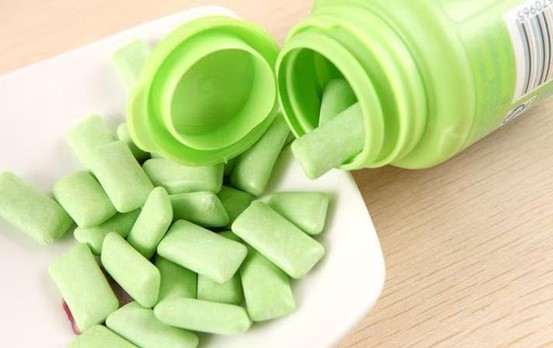
When manufacturers choose gum base, the first thing they usually compare is formulation. Texture, elasticity, and chewing performance are always important.
At the same time, another factor often influences the decision in a more practical way — the physical form of the gum base.

Block, granular, and sheet gum base are all widely used in the industry. They can be based on similar formulations, but their behavior in production can feel quite different depending on how the factory operates.
Why Granular Gum Base Is Often Chosen for Efficiency
Granular gum base is commonly selected in production lines where feeding speed and convenience are important.
Because of its smaller and more uniform size, it can be added into the mixer directly without much preparation. This helps reduce manual handling and makes the feeding stage more consistent.
In many factories, this leads to a smoother workflow, especially when production is focused on efficiency.
Why Block Gum Base Remains a Practical Option
Block gum base has been used for a long time and is still common in many factories.
Although it requires pre-heating or softening before mixing, some manufacturers prefer this step because it creates a more controlled starting condition. Once the material is ready, it usually enters the mixer in a stable and predictable way.
For longer production runs, this consistency can be helpful.
Why Sheet Gum Base Works Well in Controlled Systems
Sheet gum base is often used in production lines where conditions are well managed.
Because it is thinner, it responds quickly to heat and can integrate into the mixing process efficiently. This makes it suitable for automated systems where feeding and timing are already well coordinated.
At the same time, sheet gum base is more sensitive to temperature during transportation and storage. In warmer environments, it may soften and stick together if conditions are not controlled.
Choosing the Right Form for Your Production
In practice, there is no single "best” form of gum base.
Factories that prioritize efficiency may prefer granular gum base. Those that want a more controlled preparation process may choose block gum base. Production lines with stable conditions may find sheet gum base more suitable.
The choice usually depends on how the material is handled before mixing begins.
Conclusion
Different forms of gum base are designed to match different production setups.
Understanding how block, granular, and sheet gum base behave in real production helps manufacturers choose the option that fits their process, rather than focusing on one factor alone.
Author: Wuxi Gum Base
Publication Date: 4/1/2026